Public employment services reform: comparative analysis for KoreaTech
A model of innovation and a cautionary tale in outsourcing and system design
Client
Korea University of Technology and Education
The Challenge
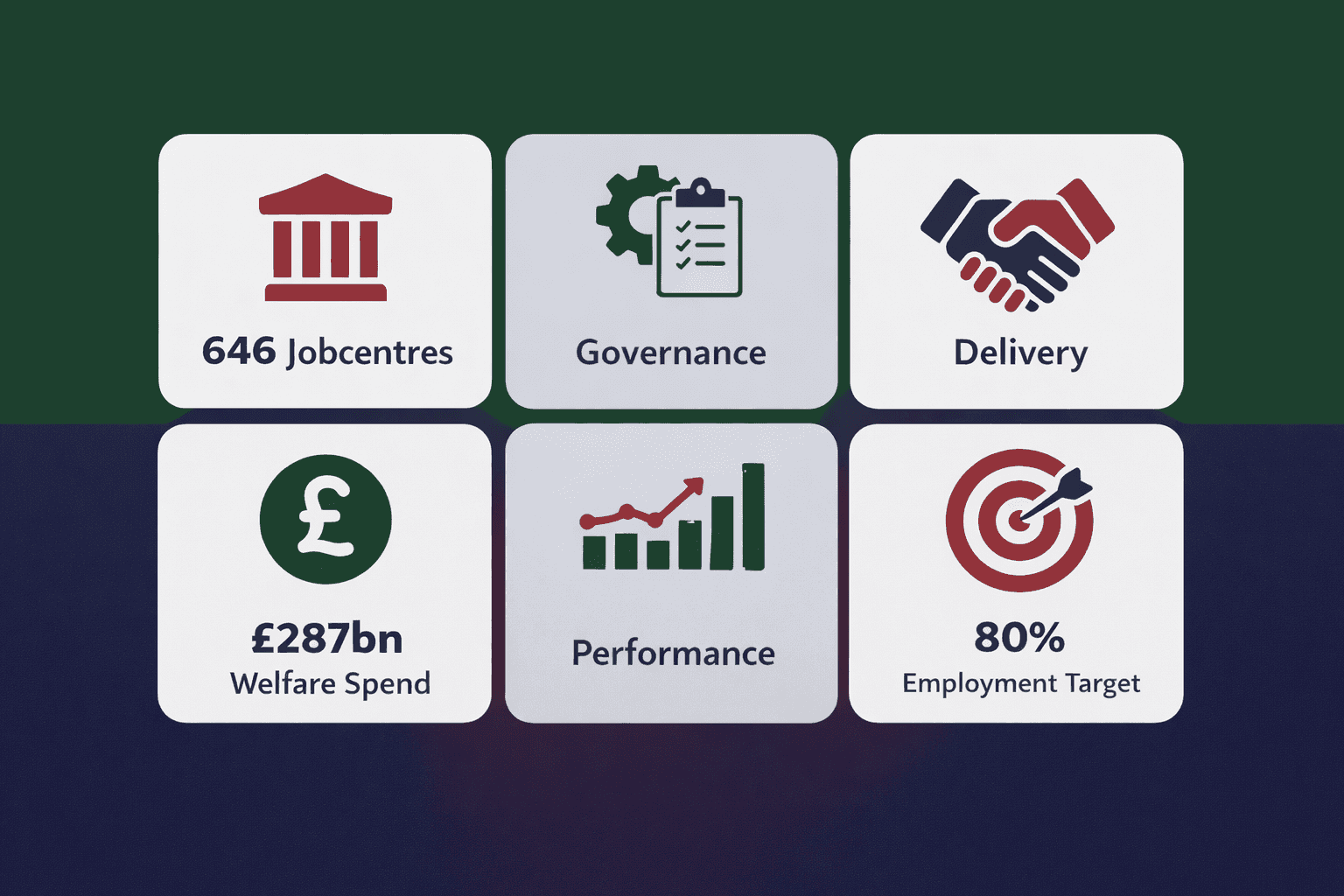
Korea University of Technology and Education (KoreaTech) commissioned an in-depth study of the United Kingdom’s public employment services as part of a wider comparative research programme on international employment systems. The objective was not simply to describe institutional arrangements, but to generate practical insight into how employment services operate in practice, how policy intent translates into delivery, and what lessons could be drawn for future reform in Korea.
The challenge lay in the complexity of the UK system itself. The UK has one of the most extensively outsourced employment support models in the OECD, combining a highly centralised welfare system with devolved governance, private and third-sector delivery, and frequent policy reform. KoreaTech required a report that was rigorous, balanced, and analytically robust — able to bridge policy, programmes, and frontline delivery without becoming overly technical or purely descriptive.
What We Did
I led the full design and delivery of the UK country study, producing a comprehensive, structured report covering the institutional, policy, operational, and performance dimensions of the system. The work combined:
detailed desk research drawing on official data, parliamentary inquiries, evaluation evidence, and policy documents
institutional analysis of the Department for Work and Pensions and Jobcentre Plus, including governance, funding, workforce, and delivery models
assessment of outsourced provision, commissioning frameworks, and market stewardship
analysis of current reforms, including devolution, integration with health and skills, and the shift towards job quality and progression
synthesis of implementation challenges, system limitations, and transferable lessons for international audiences
The final report was structured across eight chapters, moving from national context through to conclusions and future outlook, with a strong emphasis on clarity, internal consistency, and accessibility for a non-UK audience. Particular care was taken to balance policy analysis with programme-level detail and real-world delivery considerations.
Outcome
The final report received very strong feedback from KoreaTech, who described it as highly informative, well structured, and analytically balanced, with a clear and credible link between policy, programmes, and practice. The client particularly valued the depth of analysis, the clarity of the narrative, and the inclusion of critical reflection on implementation challenges rather than a purely descriptive account.
The study now forms a core input into KoreaTech’s comparative research on employment services and is being used to inform discussions on system design, governance, and reform pathways. It has positioned the UK case not only as an example of innovation in employment services, but also as a source of cautionary lessons on outsourcing, conditionality, and system complexity, supporting more nuanced, evidence-based international learning.